
What Is a Linkage Assembly? How They Work, Types & Uses
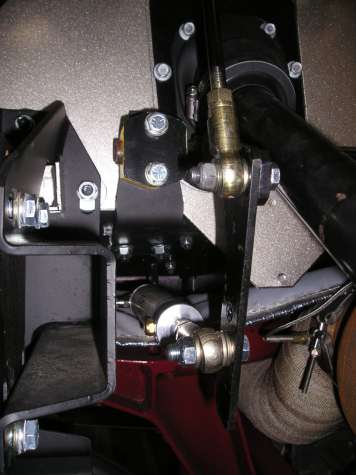
A linkage assembly (or mechanical linkage) is a series of interconnected rigid links joined by pivoting joints that transmit force and motion from one point to another. By changing the geometry of the links, a linkage can redirect motion, amplify force or change speed for example converting an engine’s rotation into the linear motion that drives a vehicle.
Linkage assemblies are found in everything from cars to industrial machinery and appliances. This guide explains what they are, how they work, the common types, and where they’re used and if you need one built, TGA Cables engineers custom linkage assemblies to spec.
What is a linkage assembly?
A linkage assembly is a mechanical system of interconnected links that transmit power or motion from one point to another. The links are usually metal, in various shapes and sizes, and are joined by pins or other fasteners that let them pivot relative to each other. Linkages transmit force and motion over a distance, and can change the direction of motion, amplify force, or change the speed of motion for example converting the rotary motion of an engine into the linear motion of a vehicle’s wheels.
How do linkage assemblies work?
Linkage assemblies work by transmitting force and motion through a chain of links. Each link is connected to one or more others by pins or fasteners; when one link moves, it drives the rest, carrying force and motion through the system. The geometry of the links and their joints determines how that motion is transformed a crank-and-rocker converts rotary motion into a rocking motion, while a four-bar linkage can control the precise path of a robot arm.
Common types of linkage
- Four-bar linkage – four links in a loop; controls a defined path of motion (e.g. robot arms, suspension).
- Crank-and-rocker – converts continuous rotary motion into a back-and-forth rocking motion.
- Slider-crank – converts rotary motion into linear motion (as in an engine’s piston).
- Bell crank – changes the direction of motion, typically through 90 degrees.
Common applications
- Automobiles – suspension, steering and transmission systems
- Industrial machinery – manufacturing, packaging and printing equipment
- Household appliances – washing machines, dryers and dishwashers
- Robotics – controlled, repeatable arm and actuator motion
Custom linkage assemblies from TGA Cables
TGA Cables provides engineered linkage solutions every day especially where a single rod end, ball joint or bearing isn’t enough. We create custom rod ends for unique mounting requirements, and design solid and adjustable linkage assemblies (with clevises and fasteners) to simplify your final assembly.
Need a linkage assembly engineered to spec?
Tell us your application or send a drawing and we’ll design a solution.
or call 03 9761 6659
Linkage assembly FAQs
Another name for a linkage assembly an arrangement of rigid links connected by joints that transmits or transforms motion and force, and can change its direction, speed or amplification.
GET A FREE QUOTE

TGA Cables is the leading cable manufacturer and supplier of a wide range of mechanical products designed for use in both commercial and industrial vehicles.
With more than 26 years of experience within the industry, we have a sound understanding of cable systems and related parts. Our level of expertise means we are well equipped to provide the right advice to our customers, ensuring you leave with a product that is perfectly suited to the job at hand.
Recent Posts
What Are Clutch Boosters?

How to Choose a Push-Pull Cable Manufacturer
